
DPF Cleaning or Replacement?

Written by:
LEGEND METAL
Legend Metal is a Japan-based recycling company specializing in the purchasing, analysis, and recovery of catalytic converters, precious metals, automotive components, batteries, and electronic scrap. Since 2014, the company has been delivering accurate valuations, transparent service, and reliable support to clients across Japan and internationally.
A clogged diesel particulate filter does not always need to be replaced. The right choice depends on whether the blockage comes from soot, non-combustible ash, oil contamination, physical damage, or a fault elsewhere in the exhaust system. For transport operators and workshops, the decision affects cost, vehicle downtime, fuel use, and long-term reliability. A professional assessment of the DPF should come before cleaning, reconditioning, or replacement.
Key Takeaways
Regeneration removes soot, but it does not remove accumulated ash.
Cleaning often suits an intact filter with a recoverable ash or soot load.
Reconditioning adds inspection, testing, and repairs where suitable.
Replacement is safer when the filter is cracked, melted, contaminated, or beyond recovery.
Always diagnose the cause of blockage before fitting a cleaned or new filter.
Compare total downtime and expected service life, not the invoice alone.
Should you clean or replace a diesel particulate filter?
Clean the filter when its core remains sound and the blockage can be removed safely. Replace it when testing finds structural damage, severe contamination, failed cleaning, or poor flow that cannot be restored.
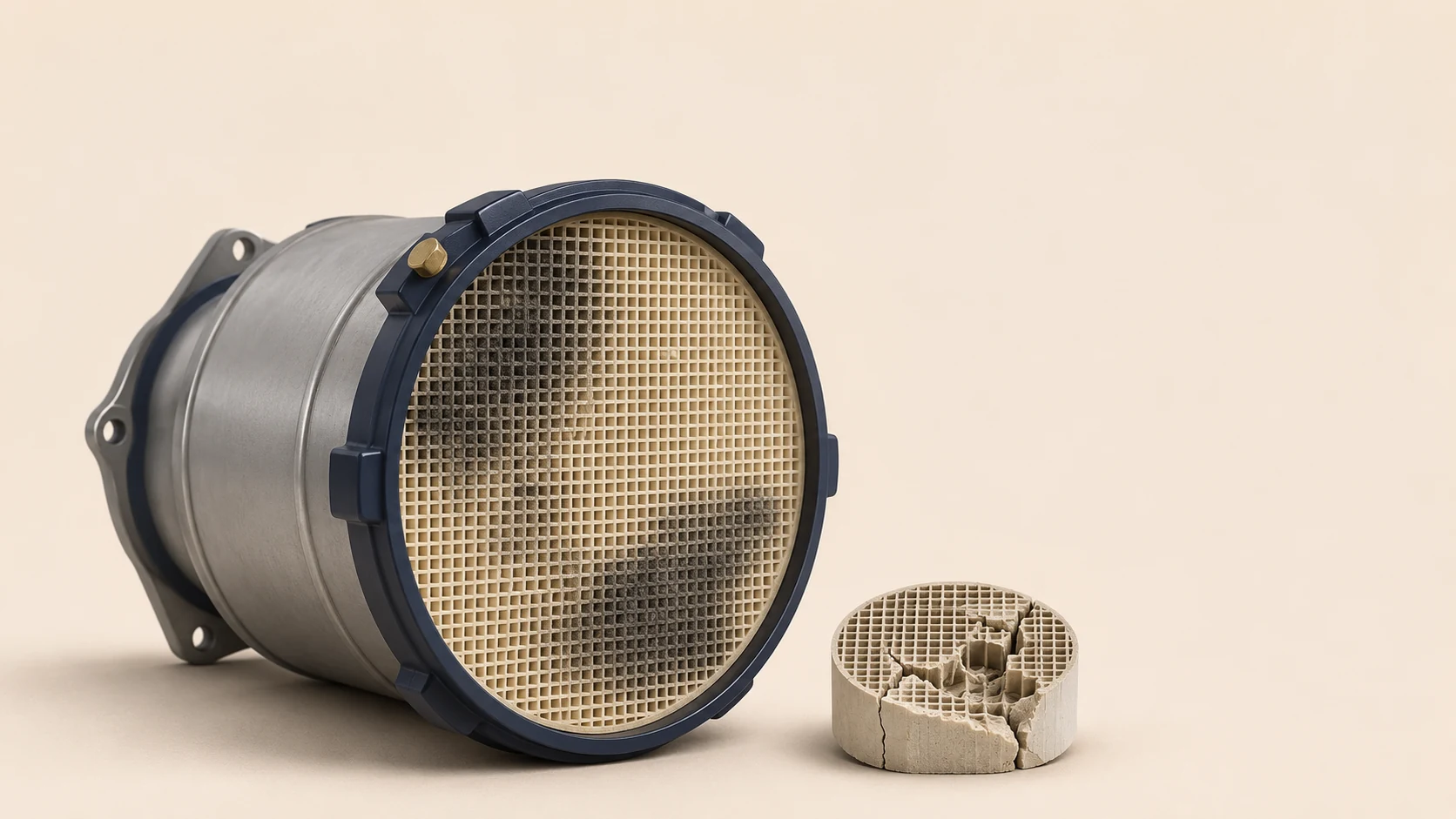
The first step is to identify what has filled the filter. Soot and ash are not the same. Soot can burn during active or passive regeneration when the exhaust reaches the required conditions. Ash comes from non-combustible material and stays inside the filter until a physical cleaning process removes it.
According to the US Environmental Protection Agency, regeneration removes collected soot, while ash remains and needs periodic cleaning. This difference matters because repeated regeneration attempts will not solve an ash-loaded filter.
Operators should also investigate why the filter became restricted. A cleaned unit may clog again if the engine has excess oil consumption, poor combustion, an injector issue, an air intake fault, or a problem with another part of the aftertreatment system. The filter may be the visible symptom rather than the root cause.
What is the difference between cleaning, reconditioning, and replacement?
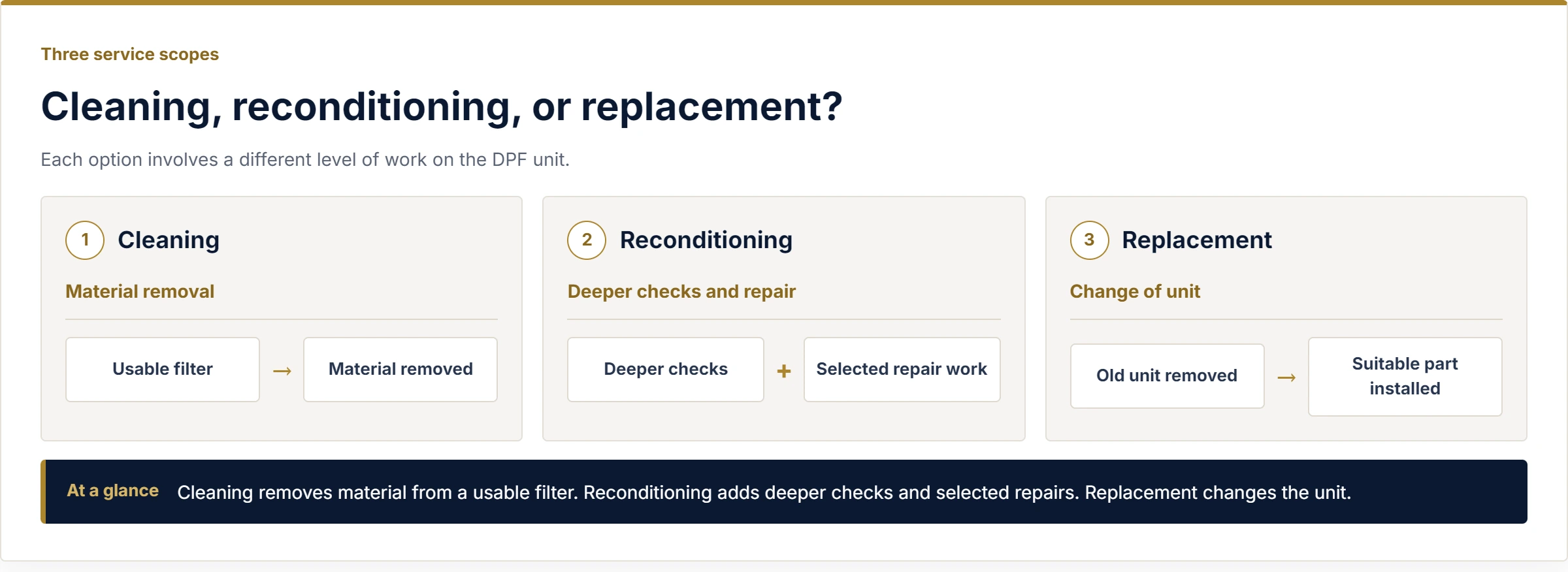
What does professional filter cleaning involve?
Professional DPF cleaning starts with an inspection and a review of diagnostic data. The service should then use a process suited to the filter design and the type of blockage.
Depending on the condition, the process may include controlled thermal treatment, air cleaning, liquid cleaning, or a combined method. The provider should protect the filter core and avoid forcing debris deeper into its channels. A final flow or pressure test helps show whether the service restored acceptable performance.
A sound cleaning report should record the filter identity, its condition before treatment, the method used, and its condition after treatment. Photos, flow readings, or pressure results can make fleet maintenance records more useful.
What does reconditioning add?
Reconditioning goes beyond removing soot and ash. It may include a more detailed inspection, testing, limited repair, and confirmation that the unit is fit to return to service.
The exact scope varies by provider and filter design. Workshops should ask what the term covers before approving the work. A low quote may cover washing alone, while a broader service may include inspection of the casing, sensor ports, flanges, clamps, or related fittings.
Reconditioning makes sense when a filter has value left but needs more than routine cleaning. However, it cannot make a cracked, melted, or badly contaminated core new again. Test results should guide the decision.
When does full replacement make more sense?
DPF replacement makes more sense when the filter cannot deliver safe, stable flow after cleaning or when its physical condition creates a high risk of another failure.
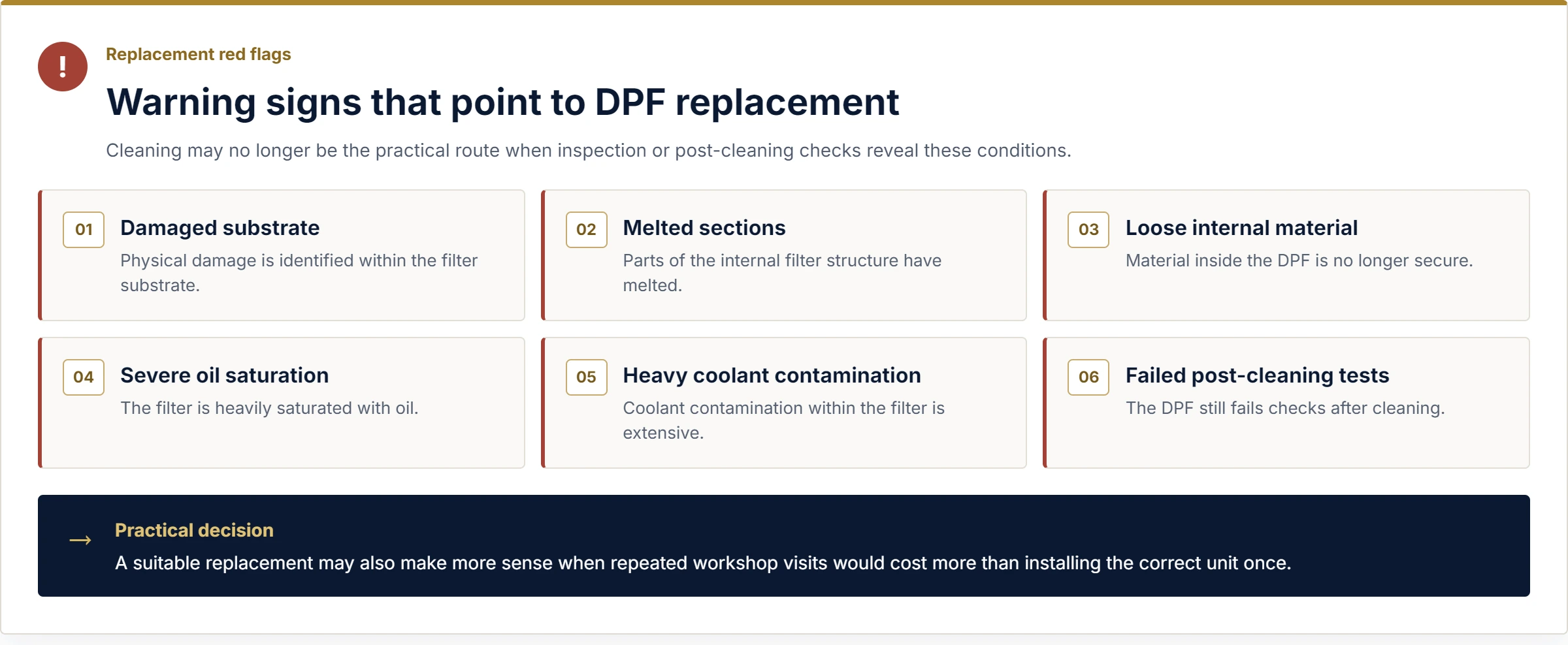
The replacement filter must match the vehicle and its emissions system. The workshop should also check sensors, pipes, clamps, seals, and fault codes. Installing a new filter without fixing the cause of the original blockage can lead to another early failure.
Which pathway fits each filter condition?
The correct pathway depends on core condition, contamination, test results, and the urgency of returning the vehicle to work. The table below provides a practical first comparison.
Filter condition | Likely pathway | Main reason | Key check before approval |
|---|---|---|---|
Soot-loaded but structurally sound | Regeneration or professional cleaning | Soot may be removable without replacing the unit | Confirm why normal regeneration did not clear it |
Ash-loaded with an intact core | Off-vehicle cleaning | Ash does not burn during regeneration | Compare flow or pressure results before and after service |
Restricted unit with minor external issues | Reconditioning assessment | Cleaning and selected repair may restore service | Ask what repairs, tests, and warranty terms are included |
Cracked, melted, or loose internal core | Replacement | Cleaning cannot restore physical structure | Diagnose heat, fueling, and engine-related causes |
Severe oil or coolant contamination | Detailed assessment, often replacement | Contamination may harm the core and cleaning result | Repair the engine fault before fitting another unit |
Failed post-cleaning flow test | Replacement or specialist review | The restriction remains after treatment | Keep the test report for the maintenance record |
Can regeneration solve every blockage?
No. Regeneration can burn soot under suitable conditions, but it cannot remove the non-combustible ash that builds up with use.
A forced regeneration may help when excess soot causes the restriction and the filter remains within safe operating limits. It should not become a default response to every warning light or high-pressure reading. Repeated attempts can waste workshop time and may expose an already damaged unit to more heat.
Ash needs an off-vehicle process that physically clears material from the channels. Research published by SAE International examines pressure drop and cleaning in ash-loaded diesel particulate filters. This supports the need to assess restriction and cleaning results rather than relying only on a dashboard message.
Diagnostic data should be reviewed as a set. Useful inputs may include differential pressure, fault history, regeneration history, operating pattern, and visual inspection. No single reading tells the whole story.
How much does cleaning cost compared with replacement?
Cleaning usually has a lower direct price than a new unit, but the cheapest invoice is not always the least costly business decision. Labour, freight, tests, vehicle downtime, repeat repairs, and remaining filter life all affect the final cost.
A realistic DPF cleaning cost quote should state what is included. Ask whether the price covers removal, transport, inspection, treatment, flow testing, refitting, seals, diagnostic work, and tax. Quotes that appear similar may cover very different work.
The DPF replacement cost depends on the vehicle, unit type, labour access, related hardware, diagnostic work, and whether other faults need repair. For that reason, a universal price figure can mislead fleet managers. A written vehicle-specific quote gives a better basis for approval.
Downtime often changes the result. Cleaning may cost less but take longer if the unit must be sent away. Replacement may return a high-use vehicle to service sooner, yet it carries a higher parts cost. Some fleets plan spare-unit rotation to reduce lost operating time, provided each unit remains identified and traceable.
How should total business cost be compared?
Compare the full cost of each pathway across the expected service period. Include both the immediate bill and the risk of another workshop visit.
Cost factor | Cleaning | Reconditioning | Replacement |
|---|---|---|---|
Initial parts or service spend | Often lower | Usually between basic cleaning and replacement | Often higher |
Testing requirement | Flow or pressure checks are important | Detailed inspection and testing should be included | New unit still needs system diagnosis |
Vehicle downtime | Depends on removal, transport, and cleaning time | May take longer due to inspection or repair | Can be shorter if the correct unit is available |
Risk of repeat restriction | Higher if the root cause remains | Depends on core condition and repair quality | Still present if engine or sensor faults remain |
Expected remaining life | Depends on filter condition and cleaning result | Depends on verified recovery and repairs | Usually offers the clearest fresh service point |
End-of-life handling | Not yet needed if the unit returns to service | Needed if the unit fails assessment | Old unit should enter a controlled recycling route |
How can workshops tell whether cleaning has worked?
A visual check alone is not enough. The workshop should use recorded test results and confirm that the filter performs correctly after refitting.
Before-and-after pressure or flow data provides useful evidence. The unit should also be checked for cracks, damaged flanges, poor seals, or loose internal material. After installation, the technician should clear faults only when appropriate, run the required checks, and confirm that pressure readings remain stable.
The driver or fleet team should then watch for renewed warning lights, frequent regeneration, reduced power, excess fuel use, or unusual exhaust behaviour. An early return of symptoms points to an unresolved engine, sensor, operating, or aftertreatment issue.
Maintenance records make future decisions easier. Record the vehicle, mileage or hours, fault codes, cleaning date, provider, test results, and parts replaced. This gives the next technician a clearer history and helps fleet managers spot repeat patterns.
What questions should you ask a cleaning provider?
Ask how the unit will be inspected, cleaned, tested, documented, and handled if it fails. Clear answers reduce the risk of paying for a process that does not restore usable performance.
Do you inspect the core before cleaning starts?
How do you distinguish soot loading from ash loading or physical damage?
Which cleaning method will you use for this filter type?
Will you provide before-and-after flow or pressure results?
What happens if the filter fails the final test?
Are removal, freight, seals, refitting, and diagnostics included?
How do you prevent filters from being mixed between customers?
What service terms apply to the completed work?
Can you document the recycling route for rejected units?
Before choosing a route, it also helps to understand how DPF regeneration works and why regeneration alone cannot remove ash. The main goal is to build a clear process from identification and testing through to reuse or responsible material recovery.
Does vehicle duty cycle affect the decision?
Yes. Vehicle use affects soot generation, exhaust temperature, regeneration opportunities, downtime pressure, and the value of a fast repair.
A vehicle that runs long, steady routes may experience different filter conditions from one used for short trips, stop-start work, or long periods of idling. Workshops should consider the real operating pattern when they review fault history. A repair plan that works for one fleet may not suit another.
Commercial operators also need to weigh vehicle importance. If one truck has no spare cover and supports a critical route, waiting for off-site cleaning may carry a high business cost. In contrast, a planned maintenance window may make careful cleaning and testing the better choice.
For large commercial exhaust units, specialist assessment matters because size, weight, safe handling, logistics, and recoverable material value can all affect the process. Legend Metal supports business enquiries concerning truck DPF units and related heavy-vehicle catalyst components.
When should a fleet create a planned maintenance schedule?
A fleet should plan maintenance before recurring restrictions cause roadside faults or unplanned workshop visits. The schedule should reflect vehicle use, service history, diagnostic findings, and manufacturer guidance.
Do not use one fixed interval for every vehicle without checking how each unit operates. Instead, track restriction trends, regeneration frequency, oil use, repair history, and past cleaning outcomes. This can help the workshop group vehicles by risk and plan work during quieter periods.
A clear process may include routine diagnostic review, filter identification, an approved cleaning route, acceptance criteria after cleaning, and a recycling route for failed units. Named responsibility also helps. Drivers report symptoms, technicians diagnose faults, and fleet managers approve the pathway based on evidence.
What should happen to a filter that cannot be reused?
A failed filter should enter a traceable recycling route rather than general waste. Its casing, filter material, and related catalyst components may require specialist handling and value assessment.
Keep the unit intact unless a qualified process calls for dismantling. Record its source, vehicle details, part markings, condition, and reason for removal. This helps with identification and gives the recycler better information for assessment.
For business fleets, workshops, dismantlers, and recyclers, separate storage can reduce damage and mix-ups. Protect removed units from weather, avoid contamination with oils or other waste, and use safe handling methods for heavy components.
Legend Metal focuses on business-oriented recovery and recycling of used catalyst units and other materials with recoverable value. Its approach places importance on clear assessment, data, responsible processing, and lasting commercial relationships. Operators who are still diagnosing the problem can compare the typical signs of a clogged DPF before deciding on cleaning or replacement.
How can operators make a sound final decision?
Use condition, test data, root-cause diagnosis, downtime, and expected remaining life as the main decision points. Do not decide from the warning light or initial quote alone.
Read the fault history and inspect the full aftertreatment system.
Confirm whether soot, ash, contamination, or damage causes the restriction.
Check the filter casing and internal core for physical failure.
Request a written scope and total quote for each realistic pathway.
Compare downtime as well as direct workshop cost.
Require post-cleaning test results before approving refitting.
Repair the cause of blockage before returning the vehicle to service.
Send rejected units through a documented recycling route.
Cleaning is often sensible for an intact, recoverable filter. Reconditioning may suit a unit that needs more checks or limited repair. Replacement is the stronger choice when damage, contamination, failed testing, or repeat downtime makes continued reuse unreliable.
Summary
The choice between cleaning, reconditioning, and replacement starts with diagnosis. Regeneration can address soot, while ash needs physical removal. A structurally sound filter may return to service after professional treatment and testing. Cracked, melted, heavily contaminated, or persistently restricted units usually need replacement.
Fleet managers should compare the full business impact, including labour, transport, tests, downtime, repeat-failure risk, and expected service life. When a unit reaches the end of its useful life, a specialist recycling service such as Legend Metal can assess related catalyst components and support a clear, responsible recovery route.