
How DPF Regeneration Works

Written by:
LEGEND METAL
Legend Metal is a Japan-based recycling company specializing in the purchasing, analysis, and recovery of catalytic converters, precious metals, automotive components, batteries, and electronic scrap. Since 2014, the company has been delivering accurate valuations, transparent service, and reliable support to clients across Japan and internationally.
Diesel particulate filter regeneration is the process that removes trapped soot from a diesel exhaust filter. It helps the filter keep working without being removed after every period of use. The process sounds technical, but the basic idea is simple: exhaust heat turns collected soot into gas, leaving more room for the filter to capture new particles. For a view of used filter units and responsible recycling, see Legend Metal's DPF service.
Key Takeaways
Regeneration uses heat to burn soot inside the filter.
Passive regeneration happens during suitable driving conditions.
Active regeneration raises exhaust heat when extra cleaning is needed.
Parked regeneration requires the vehicle to remain safely stationary.
Stopping a cycle early can leave too much soot in the filter.
Regeneration removes soot, but it does not remove all ash.
Drivers should always follow the vehicle maker's warning lights and instructions.
What does a diesel particulate filter do?
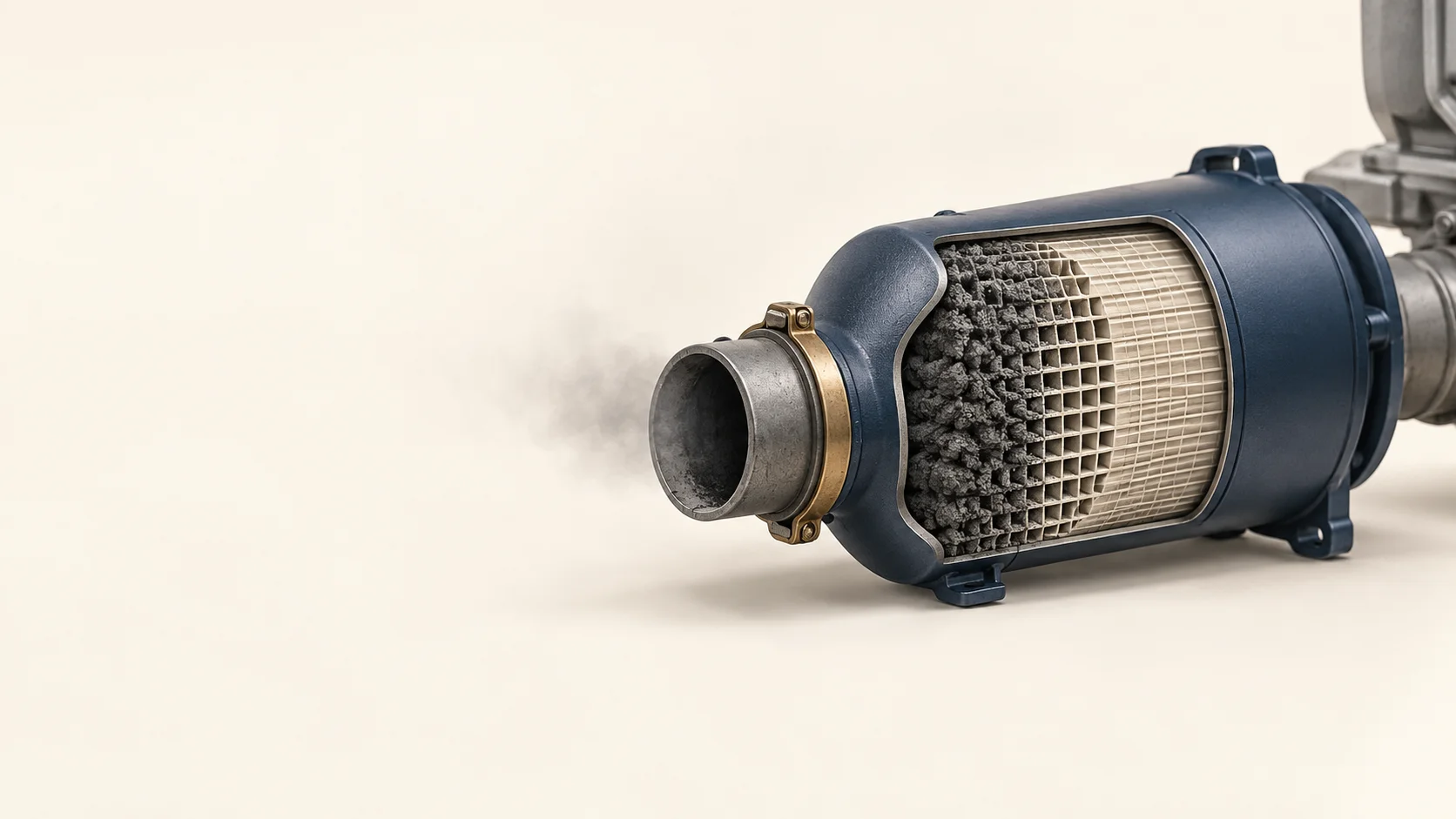
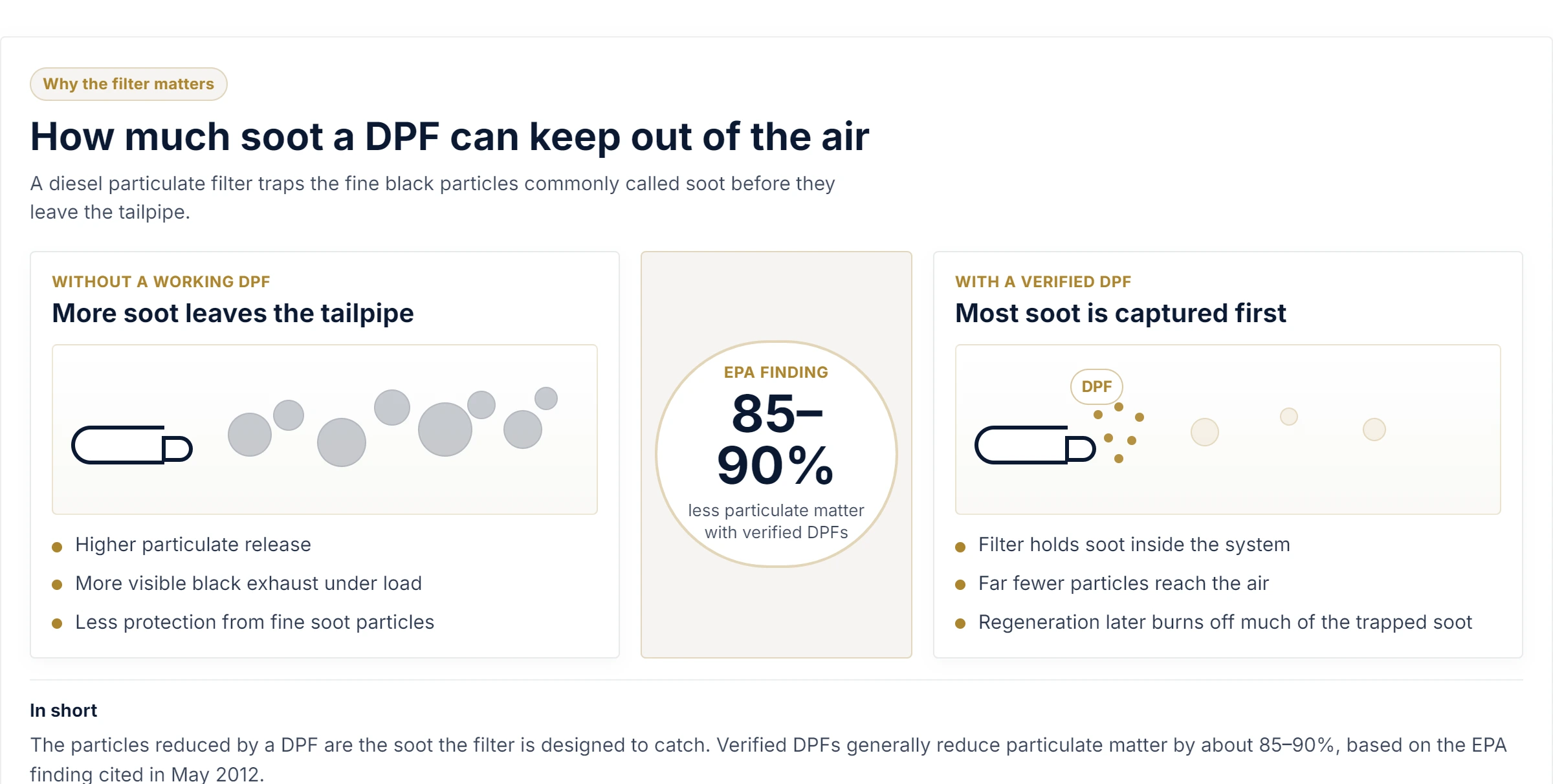
A diesel particulate filter captures soot from engine exhaust before that soot leaves the tailpipe. The trapped material stays in the filter until regeneration burns much of it away.
People who ask what is DPF regeneration are often trying to understand why a diesel vehicle changes its sound, idle speed, fuel use, or exhaust temperature for a short period. These changes may occur because the vehicle is creating the heat needed to clean its filter.
The filter contains small channels that allow exhaust gas to pass through porous walls. Soot particles remain on those walls. As the soot load grows, the exhaust system needs more effort to push gas through the filter.
Sensors help the vehicle assess operating conditions and filter restriction. The control system can then allow passive cleaning, begin an active cycle, or warn the driver that a parked or workshop procedure may be needed.
A diesel particulate filter is not the same as a catalytic converter, even though both parts sit in the exhaust system. Each has a different job. However, the parts may work together during emissions control and regeneration.
How does regeneration burn soot from the filter?
Regeneration raises or uses existing exhaust heat so trapped soot can oxidize. This changes much of the carbon-based soot into gases that can pass out through the exhaust.
According to the U.S. Environmental Protection Agency, diesel particulate filters require correct operation and maintenance. Regeneration is a core part of that process because the filter has limited space for collected soot.
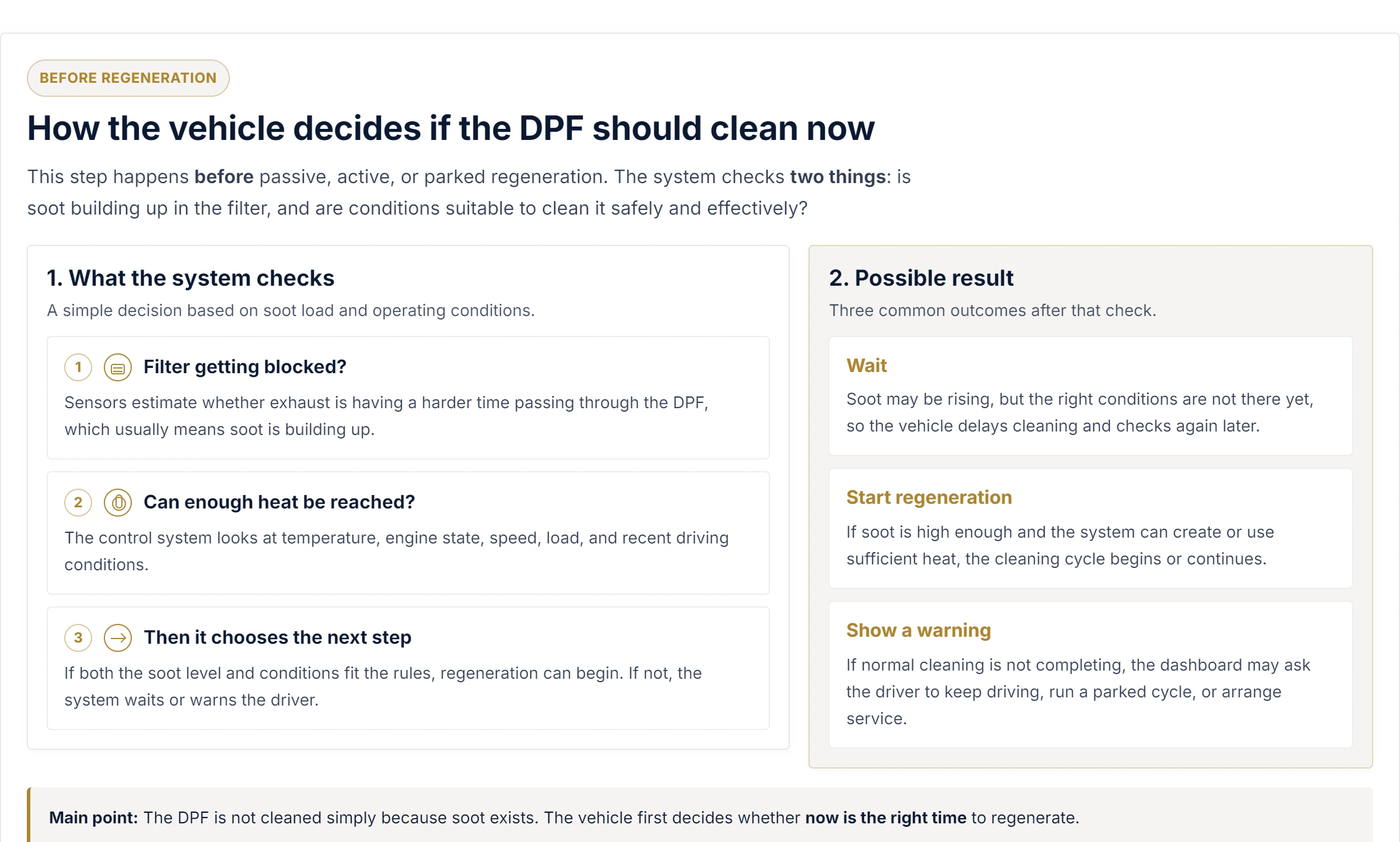
What happens before the burn-off begins?
The vehicle checks filter loading and operating conditions before it starts an active cleaning event. The exact checks and thresholds depend on the engine and filter system.
The control unit uses available sensor data to judge whether the filter needs cleaning. It may also check engine temperature, exhaust temperature, speed, load, and recent driving patterns.
If the conditions are suitable, the system begins or allows regeneration. When conditions are not suitable, it may delay the cycle. A dashboard light or message may then ask the driver to continue driving or complete a parked cycle.
What happens during the burn-off stage?
During burn-off, the exhaust system reaches the heat needed to oxidize trapped soot. The filter remains installed while hot exhaust gas flows through its channels.
An active cycle may change fuel injection or use other vehicle-specific controls to increase exhaust temperature. Drivers may notice a higher idle, a different engine note, cooling fan operation, or a hot smell. The signs vary, so the owner's manual remains the main guide for that vehicle.
High exhaust heat also means the vehicle needs a safe operating area. Dry grass, stored fuel, paper, and other combustible material should not sit close to the exhaust outlet or hot after-treatment parts.
What remains after regeneration finishes?
Regeneration clears combustible soot, but it does not remove every material held in the filter. Non-combustible ash can remain and build up over time.
A completed cycle reduces soot restriction and restores space for new particles. However, it cannot repair cracked filter material, failed sensors, oil contamination, coolant contamination, or engine faults that create excess soot.
A filter with too much ash may need professional cleaning or replacement. Treating every warning as a simple regeneration issue can hide a wider engine or exhaust problem.
What are passive, active, and parked regeneration?
These are three common ways a diesel particulate filter manages soot. They differ mainly in how heat is produced and whether the vehicle must be moving.
Automatic DPF regeneration usually refers to passive or active cleaning that the vehicle manages without the driver starting a special stationary procedure. The driver may still need to maintain suitable driving conditions until the cycle ends.
How does passive regeneration work?
Passive regeneration uses heat that already exists during normal vehicle operation. It is most likely when the engine runs long enough under conditions that keep exhaust temperature at a useful level.
Long, steady journeys may support passive cleaning better than repeated short trips. Yet a driver should not assume that every motorway or highway trip completes a cycle. Engine load, weather, traffic, soot level, and vehicle design can affect the result.
How does active regeneration work?
Active regeneration begins when the vehicle decides that normal exhaust heat is not enough. The engine control system then takes steps to raise exhaust temperature and burn the soot.
The process may start while the vehicle is being driven. When possible, the driver should avoid switching off the engine before the cycle finishes. The vehicle manual may describe signs that show an active event is underway.
Active regeneration is still an automatic process. It should not be confused with a workshop procedure started with diagnostic equipment.
How does parked or manual regeneration work?
Parked regeneration is a driver-requested stationary cycle on vehicles designed to support it. The driver parks in a safe location and follows the maker's stated sequence.
The term manual does not mean opening, burning, or cleaning the filter by hand. It means the driver or technician starts a controlled vehicle function. The engine may hold a raised idle while exhaust temperature increases.
Before starting, the operator should check the vehicle instructions, warning messages, fuel level requirements, and site safety rules. No one should leave the vehicle in an unsuitable area while the exhaust system becomes hot.
How do common regeneration modes compare?
Passive, active, and parked regeneration all reduce soot, but they begin under different conditions. This table shows the practical differences a driver or fleet manager may see.
Regeneration mode | How it starts | Vehicle condition | Driver role |
|---|---|---|---|
Passive | Suitable exhaust heat occurs during normal use | Usually moving under steady load | Continue suitable driving and watch for warnings |
Active | The control system raises exhaust temperature | Usually moving, though the design varies | Avoid interrupting the cycle when safe to continue |
Parked | The driver requests a stationary cleaning cycle | Safely parked with required conditions met | Follow the maker's sequence and monitor the vehicle |
Workshop service | A trained technician uses approved diagnostic or cleaning methods | Vehicle remains at a suitable service site | Arrange inspection when warnings persist |
How long does filter regeneration take?
There is no single regeneration duration for every diesel vehicle. Cycle length depends on filter loading, exhaust heat, engine condition, duty cycle, and the system fitted by the maker.
When people search for DPF regeneration time, they often want one fixed number. A fixed estimate can be misleading. Some cycles finish during a normal journey, while a parked event may continue until the system confirms that soot has fallen to an acceptable level.
The dashboard message, regeneration lamp, idle speed, or vehicle manual may show when the process ends. Drivers should not rely only on a clock. If the warning remains after the stated procedure, repeated attempts may not solve the cause.
Fleet records can help here. Note the date, warning stage, mileage, route type, cycle result, and any fault messages. A pattern of more frequent cycles may point to a change in vehicle use or a fault that needs diagnosis.
Why do short trips interrupt regeneration?
Short trips may end before the exhaust reaches or maintains useful cleaning heat. Switching off the engine can also stop an active cycle before enough soot has burned away.
One interrupted event does not always mean the filter has failed. The vehicle may try again when the required conditions return. Repeated interruption, however, can allow the soot load to keep rising.
Urban delivery work can make this more likely because the vehicle may spend long periods at low speed, at idle, or switching between short stops. Commercial operators should plan around the instructions for each model rather than apply one rule to a mixed fleet.
Readers asking what is truck DPF regeneration usually need this operational view. A commercial vehicle may have a clear parked regeneration control and a series of warning stages. Those stages should be part of driver training and daily vehicle checks.
For an additional service reference, Legend Metal provides information related to the question what is DPF and the responsible handling of used units.
What problems can repeated interruption cause?
Repeated interruption can leave the filter with a rising soot load. The vehicle may then request a parked cycle, limit engine output, or require workshop attention.
As restriction rises, the system may move through stronger warning stages. The exact lamps, messages, and responses differ between vehicles. Operators should never erase a warning, disconnect a sensor, or keep driving against the maker's instructions.
The California Air Resources Board stresses the importance of correct installation and maintenance for heavy-duty diesel emission control systems. That wider maintenance view matters because frequent regeneration issues may begin outside the filter itself.
Possible causes need proper diagnosis. The issue may involve a sensor, fuel system, air supply, engine oil use, exhaust leak, or another part of the emissions system. Forcing one cycle after another does not confirm that the whole system works as designed.
What do common warning stages mean for the next step?
Warning displays vary, but increasing urgency usually calls for faster action. This table shows a general response framework, not a replacement for the vehicle manual.
Observed situation | Possible meaning | Practical response |
|---|---|---|
No warning and normal operation | The system may be managing soot during regular use | Keep using the vehicle as instructed and maintain service records |
Regeneration notice or filter light | The vehicle may need suitable driving or a requested cycle | Read the message and follow the model-specific procedure |
Warning remains after a completed attempt | The soot load or another fault may still be present | Arrange diagnosis rather than repeat cycles without guidance |
Power reduction or severe warning | The system may be protecting the engine and after-treatment parts | Stop or seek service as directed by the vehicle maker |
Visible damage, unusual smoke, or unsafe heat | A fault may extend beyond routine soot loading | End operation safely and request qualified inspection |
When is manual regeneration appropriate?
Manual or parked regeneration is appropriate only when the vehicle supports it and its warning system calls for it. The procedure must take place in a safe area under the stated conditions.
Before starting, park away from people, traffic, buildings, vegetation, stored goods, and flammable material. Apply the parking brake and follow all dashboard prompts. Do not touch hot exhaust parts or stand close to the outlet.
If the cycle refuses to start, one or more required conditions may not be met. A fault may also block the request. Guessing, bypassing a safety condition, or repeatedly pressing the switch can make the situation worse.
A technician-requested service cycle is different from a normal driver request. Workshop equipment can read fault codes and live sensor values, which helps determine whether regeneration is safe and likely to work.
When does the filter need cleaning or replacement?
The filter may need off-vehicle cleaning or replacement when regeneration no longer restores normal operation. Ash loading, physical damage, contamination, or an unresolved engine fault may be involved.
Regeneration and professional cleaning are not the same. Regeneration burns soot inside the installed filter. Off-vehicle cleaning aims to remove material that normal burn-off cannot clear, subject to the filter's condition and the approved service method.
A removed filter should remain traceable through inspection, storage, transport, and its next approved route. Businesses handling used exhaust parts should identify units clearly and keep them separate from mixed waste.
Legend Metal's published values and vision provide more context on its approach to responsible resource recovery. Companies can also review the firm's branch information when planning business enquiries in Japan.
How can fleets reduce regeneration trouble?
Fleets can reduce trouble through clear driver guidance, correct maintenance, and good event records. The aim is to notice repeated patterns before they cause longer downtime.
Teach the warning stages. Drivers should know what each lamp or message means for the vehicle they use.
Explain signs of an active cycle. A driver who recognizes the process is less likely to switch off the engine without need.
Provide a safe parked area. Vehicles that support stationary cleaning need enough space away from combustible material.
Record interrupted cycles. A simple log can show whether one route, shift, or vehicle has a repeated issue.
Investigate rising frequency. More cleaning events can justify a service check rather than another routine cycle.
Control removed parts. Label used filters and keep records before arranging assessment, collection, or recycling.
Maintenance schedules should reflect the vehicle maker's instructions and the actual duty cycle. A long-haul truck, city bus, construction vehicle, and local delivery van may place very different demands on an exhaust filter.
Summary
Regeneration works by using controlled exhaust heat to oxidize soot trapped in a diesel particulate filter. Passive cleaning uses heat already present, active cleaning raises heat through vehicle controls, and parked regeneration starts only after a driver request and required safety checks.
The key lesson is simple: allow a normal cycle to finish when it is safe, respond to warnings early, and seek diagnosis when the same issue returns. Regeneration can remove soot, but it cannot remove all ash or correct every engine fault.
Businesses that remove and manage commercial exhaust units can review Legend Metal's truck DPF service. A clear route for assessment and recycling helps keep used parts traceable after their service life ends.