
Why Catalytic Converters Have Value
What Drives Value

Written by:
LEGEND METAL
Legend Metal is a Japan-based recycling company specializing in the purchasing, analysis, and recovery of catalytic converters, precious metals, automotive components, batteries, and electronic scrap. Since 2014, the company has been delivering accurate valuations, transparent service, and reliable support to clients across Japan and internationally.
Used catalytic converters can keep real recycling value long after a vehicle leaves the road. Their value comes mainly from platinum group metals in the catalyst material, not from the steel shell alone. Yet each unit differs. Its part number, vehicle type, internal condition, metal content, and current market demand all affect the result. For workshops and suppliers, a clear unit check is the first step when handling valuable catalytic converters.
Key Takeaways
Used converters retain platinum, palladium, and rhodium in their catalyst material.
A used unit may still have recycling value even when it no longer works well on a vehicle.
Part numbers and unit types help identify expected metal content.
Mixed or processed material may need laboratory analysis.
Size alone does not show how much a converter is worth.
Clear records and traceable handling support fair assessment.
Sorting before collection can make the process faster and easier to review.
Why do used catalytic converters retain recycling value?
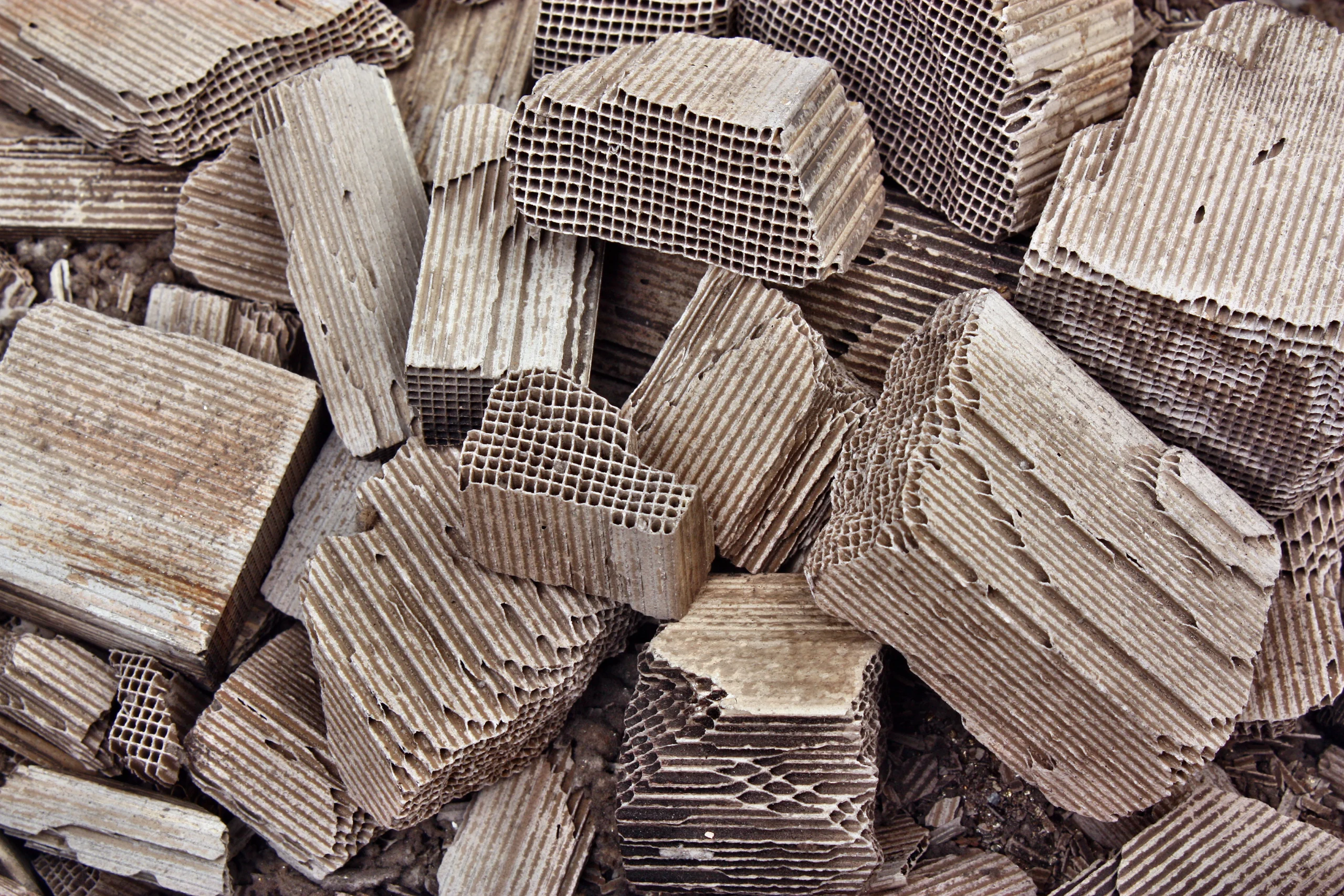
Used catalytic converters retain value because part of their platinum group metal content can remain in the catalyst after years of vehicle use. These materials can enter a controlled recovery and refining process.
A converter reduces harmful substances in vehicle exhaust through chemical reactions. Its inner ceramic or metallic substrate has a coated surface that acts as the catalyst. That coating contains small amounts of platinum, palladium, rhodium, or a mix of these metals.
The converter may stop meeting vehicle performance or emissions needs because of age, damage, contamination, or a fault elsewhere in the engine system. This does not always mean that every recoverable metal has vanished. A recycler assesses what remains and whether the material suits further processing.
This explains the basic statement that catalytic converters contain precious metals. However, it does not mean every converter has the same content or value. Some units have different coatings. Others may have lost internal material or suffered severe physical damage.
What materials create the recycling value?
Platinum, palladium, and rhodium create most of the recoverable material value associated with an automotive catalyst. Together, they belong to the platinum group metals, often shortened to PGM.
Each metal plays a role in emissions control. The exact mix depends on the converter design and its intended vehicle use. Manufacturers may use different formulations for petrol, diesel, hybrid, commercial, or industrial applications.
The phrase automotive catalyst precious metals usually refers to these PGM materials. People also search for automotive catalyst rare metals, though that broad term can cover other materials. For converter assessment, it is more useful to identify the unit and its expected PGM profile.
The U.S. Geological Survey includes platinum group metals in its mineral commodity reporting. This reflects their role as important industrial materials. A used converter can therefore serve as a secondary source of precious metals when it follows a proper recycling route.
Why are platinum group metals used in such small amounts?
Platinum group metals support the chemical reactions needed inside a converter, so only a coated layer is required. Even so, small differences in metal content can affect the recycling assessment.
The metals sit across a large internal surface. This structure lets exhaust gas contact the catalyst coating as it passes through the unit. The metal loading can vary by model, production period, engine, and emissions system.
For that reason, a visual check cannot show the full metal content. The shell may look large and heavy, yet the catalyst coating may differ from that of a smaller unit. Reliable identification or analysis gives a stronger basis for assessment.
Which factors affect a used converter's recycling value?
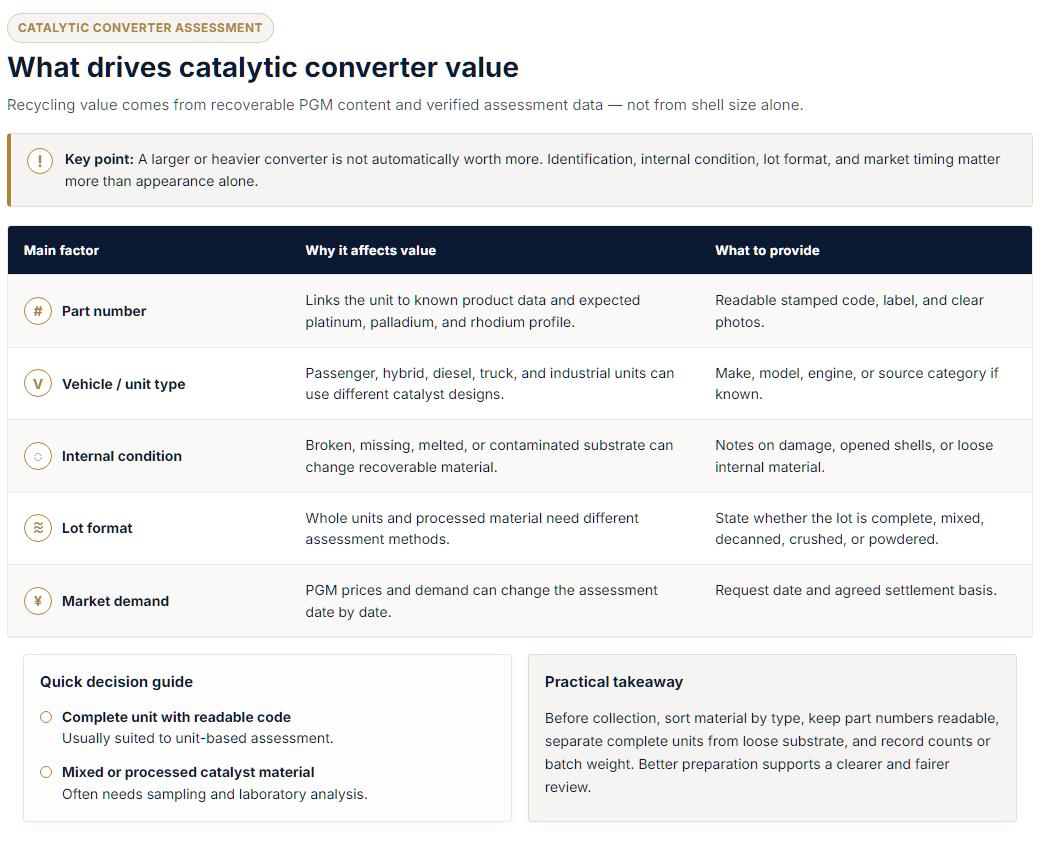
Unit identity, internal content, condition, metal demand, and processing needs all affect the assessment. No single feature gives a complete answer.
Assessment factor | Why it matters | What a supplier can provide |
|---|---|---|
Part number | It helps identify the converter family and expected specification. | Clear photos or a readable list of stamped codes. |
Vehicle and unit type | Passenger, hybrid, diesel, truck, and industrial units may use different designs. | Make, model, engine, or source category where known. |
Internal condition | Missing, broken, melted, or contaminated substrate may change recoverable content. | Notes on damage, opened shells, or loose internal material. |
Lot format | Whole units, mixed lots, and processed powder need different assessment methods. | Unit count, weight, and details of any prior processing. |
Market conditions | Demand for each PGM can change the material value at the time of settlement. | A clear request date and agreed assessment basis. |
Traceability | Source records support lawful, responsible, and reviewable handling. | Business details, inventory records, and transfer documents. |
Why do converter values differ so much by unit?
Converter values differ because manufacturers use different catalyst designs and metal loadings. Two units of a similar size may have very different material profiles.
Vehicle type is only one clue. The engine, fuel, emissions standard, production period, and converter position may also matter. A vehicle can even have more than one emissions-control unit, with each part serving a different task.
How does the part number help with assessment?
A readable part number can link a complete unit to known identification data. This often makes unit-based assessment faster and clearer.
Suppliers should avoid removing labels or grinding stamped areas. Dirt can be cleaned with care, but the code should stay intact. Photos should show the full shell, both ends, and any printed or stamped marks.
A structured database can support consistent identification. It can also reduce the risk of treating two similar-looking units as the same product. Legend Metal outlines its wider approach to transparent and responsible work in its values and vision.
Does a larger converter always have more value?
No. A larger shell may contain more substrate, but size and weight alone do not prove higher PGM content.
A large commercial unit may require more handling and transport. However, its actual assessment still depends on the internal material and unit specification. In contrast, a compact unit may contain a coating profile that gives it notable recycling interest.
This is why experienced buyers do not rely on appearance alone when reviewing high-value catalytic converters. Identification data and condition matter more than a quick visual guess.
Does market demand change the assessment?
Yes. Demand for platinum, palladium, and rhodium can change over time, so the same identified unit may not receive the same assessment on every date.
Market data should form one part of the process. It should not replace unit identification or material analysis. A clear assessment connects the known or measured metal profile with the agreed market basis and processing terms.
This is one reason simple online lists can mislead suppliers. A list may not reflect the exact unit, its condition, the assessment date, or the method used. A documented quote gives more useful context.
How do unit-based and analysis-based assessments differ?
Unit-based assessment identifies complete converters one by one, while analysis-based assessment measures prepared material from a lot. The right method depends on the form, volume, and mix of the material.
Whole converters with readable codes often suit unit assessment. Mixed bulk material, decanned substrate, powder, or large processed lots may call for sampling and laboratory analysis instead.
What does each converter assessment method show?
Unit assessment estimates value from identified product data, while analysis measures the PGM content of a representative sample. Both methods need clear records and an agreed process.
Point of comparison | Unit-based assessment | Analysis-based assessment |
|---|---|---|
Typical material | Complete, unprocessed converters. | Mixed, bulk, decanned, or prepared catalyst material. |
Main basis | Part number, maker, model data, condition, and market indicators. | Sampling, preparation, laboratory measurement, and reported PGM content. |
Useful supplier records | Unit list, photos, codes, and source details. | Lot weight, processing history, sample records, and batch details. |
Main benefit | Each identifiable unit can receive a separate assessment. | The lot can be assessed from measured material content. |
Key control | Correct identification and an intact internal structure. | Representative sampling and clear handling of the sample. |
When is laboratory analysis more suitable?
Laboratory analysis is more suitable when individual unit identity no longer gives a sound basis for valuation. This often applies to mixed, processed, or decanned catalyst material.
The lot should first be weighed and prepared under a defined process. Sampling must represent the full batch, not just an easy-to-reach section. The sample can then be measured for platinum, palladium, and rhodium content.
A data report should state what was measured and how the result relates to the batch. This measured approach helps explain why catalytic converters are expensive without relying on broad claims or the shell's appearance.
Can whole units and processed material use the same quote?
Not usually. Whole units and processed catalyst material require different checks, handling steps, and settlement terms.
A unit quote may depend on part identification. Once several units have been decanned and mixed, the original identity may no longer represent the batch. Analysis then gives a more suitable route because it focuses on measured content.
Suppliers should describe the material before arranging collection. State whether the units are complete, cut, broken, emptied, mixed, or already processed. This simple step prevents delays and helps the buyer prepare the right review.
Why does traceable recycling matter?
Traceable recycling matters because used converters have both material value and supply-chain risk. Records help confirm where a lot came from, how it moved, and which process followed.
The Congressional Research Service has discussed catalytic converter theft and the role of the metals found in converters. For legitimate workshops, dismantlers, and suppliers, good source records help separate normal business material from unclear stock.
Traceability also supports internal control. A supplier can match collection documents with inventory records, unit counts, lot weights, and assessment reports. If a question appears later, both sides have a clearer history to review.
What records should a business keep?
A business should keep records that connect the material to its source, storage, transfer, and assessment. The exact documents will depend on the business and the type of lot.
Supplier or workshop details.
Collection date and collection location.
Unit count or batch weight.
Photos of units and part numbers.
Vehicle or dismantling records where available.
Notes about cut, damaged, or opened units.
Transport and transfer documents.
Quote, analysis, and settlement records.
These records do not need to be complex. A repeatable file system and clear lot numbers can make a major difference. The aim is to keep each batch easy to identify from receipt through recycling.
How should used converters be stored before collection?
Used converters should be stored in a secure, dry, and clearly marked area. Different material groups should remain separate where possible.
Keep complete units apart from loose substrate and processed material. Do not mix unidentified pieces into a batch of coded units. If a converter is damaged, use a suitable container to retain loose catalyst material and mark the container with the matching lot details.
Access control also matters. A simple stock count can help a workshop notice missing or added units. For larger volumes, numbered containers and dated inventory sheets can make collection faster.
What mistakes can reduce assessment accuracy?
Poor sorting, missing codes, mixed material, and incomplete records can reduce assessment accuracy. Rough handling may also cause recoverable substrate to escape.
Should suppliers cut open every converter?
No. Suppliers should not open complete converters unless the agreed service requires prepared material and they have suitable controls.
Opening units can remove the part number from its internal material. It may also create dust, cause material loss, and turn an easy unit assessment into a more complex lot analysis. Whole, identifiable units are often better kept intact for unit-based review.
Is a failed converter the same as an empty converter?
No. A failed converter may still contain its catalyst substrate, while an empty converter has lost or had its internal material removed.
Vehicle failure can have several causes. The substrate may be contaminated, cracked, melted, or no longer effective for emissions control. Recycling assessment asks a different question: what recoverable catalyst material remains?
A shell with no internal substrate should never be presented as a complete unit. Clear disclosure protects the business relationship and prevents disputes during checking.
Can colour or weight prove PGM content?
No. Colour and weight may help describe a unit, but they cannot prove its platinum, palladium, or rhodium content.
Surface dirt, steel thickness, heat exposure, and design can all affect appearance and total weight. The PGM coating forms only part of the internal structure. Identification or laboratory measurement provides a stronger basis.
How can suppliers prepare converters for a fair assessment?
Suppliers can improve the process by sorting units, protecting codes, recording source details, and sharing the lot format before collection. Clear preparation saves time for both parties.
Separate complete and processed material. Do not mix whole units with loose ceramic, powder, or empty shells.
Group similar units. Sort passenger, hybrid, diesel, truck, and industrial units where the source is known.
Protect identification marks. Keep stamped codes and labels readable.
Photograph the lot. Include full-unit images, codes, visible damage, and packed containers.
Count or weigh the material. Record the figure before transfer.
State any prior processing. Tell the assessor if units have been cut, opened, decanned, crushed, or mixed.
Keep source documents. Link each batch to the relevant workshop, dismantling, or supplier record.
Confirm the assessment route. Agree whether the lot will use unit identification or laboratory analysis.
Businesses that work across Japanese and other language settings may also find Legend Metal's Japanese values and vision page useful when sharing the company's approach with local staff.
How should a business choose between unit purchasing and analysis?
Choose unit purchasing for complete, identifiable converters and analysis for mixed or prepared catalyst material. Volume and lot consistency also affect the decision.
A workshop with a modest batch of intact units may benefit from item-by-item identification. A dismantler or recycler with a large mixed batch may need a measured result based on representative sampling.
Before sending material, ask what data the assessment will use. For whole units, that may include the code, manufacturer, model data, condition, and market indicators. For analysis, ask how the material will be prepared, sampled, measured, and reported.
A clear method makes the value inside catalytic converters easier to explain and review. It also supports more useful talks between suppliers, workshops, recyclers, and the assessment team.
Summary
Used catalytic converters retain recycling value because platinum, palladium, and rhodium may remain in their catalyst material after vehicle use. The shell itself does not provide a reliable guide. Part number, unit type, internal condition, lot format, measured content, and market demand all matter.
Complete units often suit individual identification. Mixed or processed catalyst material may need controlled sampling and laboratory analysis. In both cases, source records and traceable handling support a fair and clear result.
Legend Metal provides business-focused assessment and recycling support for used automotive catalysts. Workshops, dismantlers, suppliers, and recycling firms can prepare for a smoother review by sorting material, protecting codes, recording batch details, and confirming the assessment method before collection.