
Catalytic Converter Structure and Types

Written by:
LEGEND METAL
Legend Metal is a Japan-based recycling company specializing in the purchasing, analysis, and recovery of catalytic converters, precious metals, automotive components, batteries, and electronic scrap. Since 2014, the company has been delivering accurate valuations, transparent service, and reliable support to clients across Japan and internationally.
A clear view of catalytic converter structure helps dismantlers, repair shops, recyclers, and buyers handle used units with greater care. Most converters share the same basic purpose, yet their internal build can vary by substrate, cell design, housing, and vehicle use. These details affect strength, damage risk, sorting, and recycling review. A unit-based catalyst service can assess complete converters by part number, maker, model, condition, and relevant market data.
Key Takeaways
A converter usually contains a steel shell, support material, a substrate, a coating, and precious metals.
Ceramic substrates are common, heat resistant, and vulnerable to impact damage.
Metallic substrates use thin metal foil and can suit compact or demanding applications.
External size alone does not show the recoverable value of a used converter.
Part numbers, vehicle data, weight, and internal condition support a sound review.
Careful storage keeps units intact and improves traceability.
Complete units and processed material need different evaluation methods.
What is inside a catalytic converter?
A catalytic converter contains several parts that work together to guide exhaust gas across a treated surface. The main parts are the outer shell, insulation or support mat, internal substrate, surface coating, and active precious metals.
The steel shell protects the inner core and connects the unit to the exhaust system. Its shape may look simple, but it must cope with heat, road vibration, and changes in exhaust flow. Welded cones or pipes guide gas into and out of the body.
Inside the shell, a support mat holds the substrate in place. It also helps shield the core from vibration and contact with the steel housing. If the mat loses its grip or the shell takes a hard hit, the inner core may move, crack, or break apart.
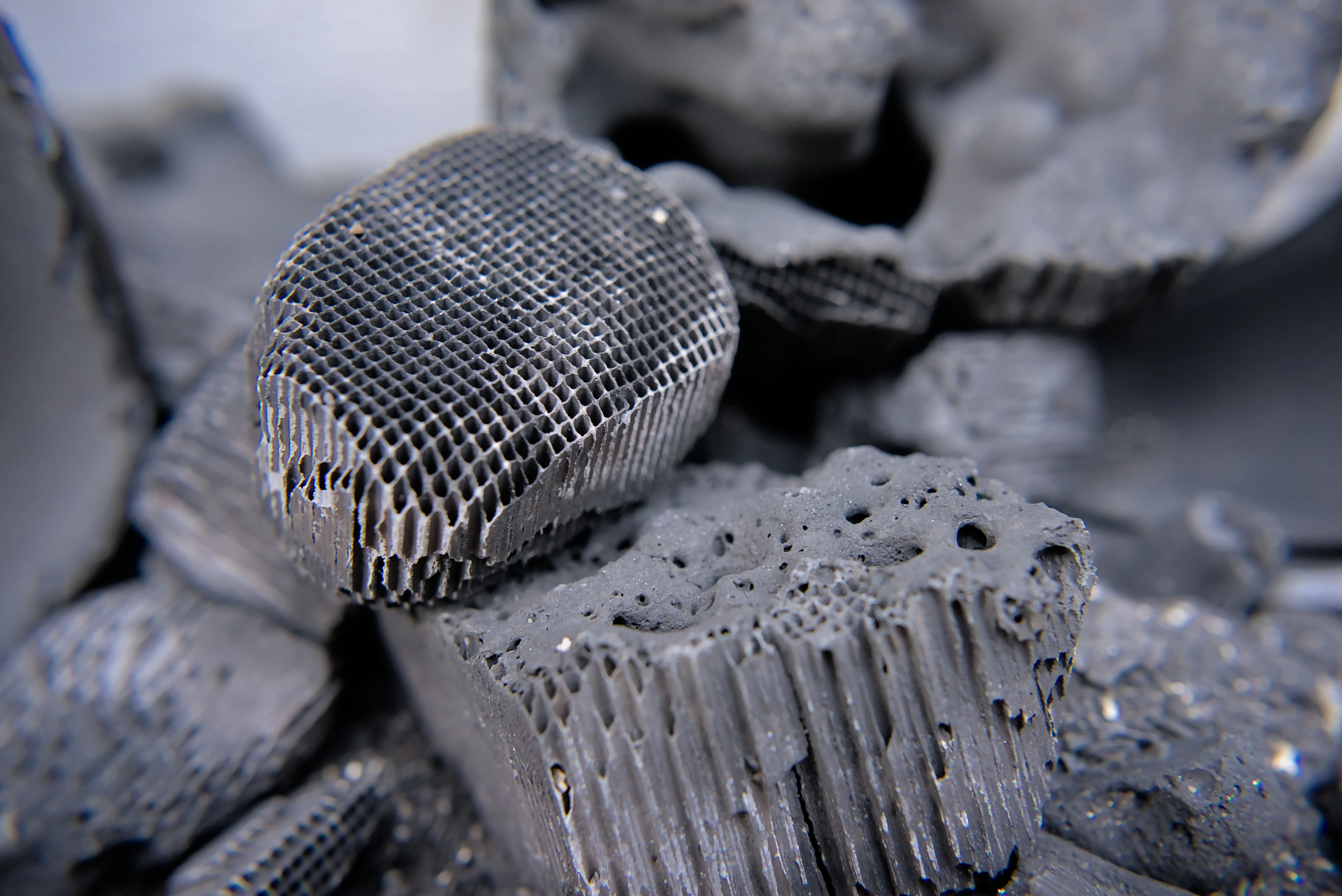
The substrate forms the main internal framework. It has many small channels running through it. Exhaust gas passes through these channels rather than through a solid block. A thin surface layer provides a large area for the active materials.
According to the US Environmental Protection Agency, catalytic converter systems use a supported active surface to promote reactions in the exhaust stream. The exact system depends on the engine and emission-control design.
How does the internal core treat exhaust gas?
The core brings flowing exhaust into contact with its coated channel walls. This contact allows chemical reactions to occur without the core becoming part of the final reaction products.
The channel pattern is often called a honeycomb or cellular monolith. It gives gas many paths while keeping the core compact. The coating on those paths carries platinum group metals such as platinum, palladium, and rhodium.
The amount and mix of those metals are not clear from shell size alone. Vehicle type, application, maker, age, and unit design may all matter. For that reason, visual review should not replace identification or material analysis.
What does the automotive catalyst structure include?
The automotive catalyst structure includes both mechanical and active layers. Each layer has a separate role in gas flow, heat control, physical support, and exhaust treatment.
Outer shell: A steel casing that protects the internal parts.
Inlet and outlet sections: Tapered areas that direct exhaust through the core.
Support mat: Material that cushions and secures the substrate.
Substrate: A ceramic or metallic body with many narrow channels.
Surface coating: A porous layer placed over the channel walls.
Active metals: Platinum group metals carried on the coated surface.
A used unit may still look sound from the outside even when the inner core has cracks or missing sections. A loose rattle, crushed shell, open seam, or powder near a cut edge can point to internal damage. These signs help with handling and sorting, but they do not establish metal content.
How do ceramic and metallic substrates compare?
Ceramic designs use a rigid mineral-based monolith, while metallic designs use formed metal foil. Both create many channels, but they behave differently under impact, vibration, heat, and processing.
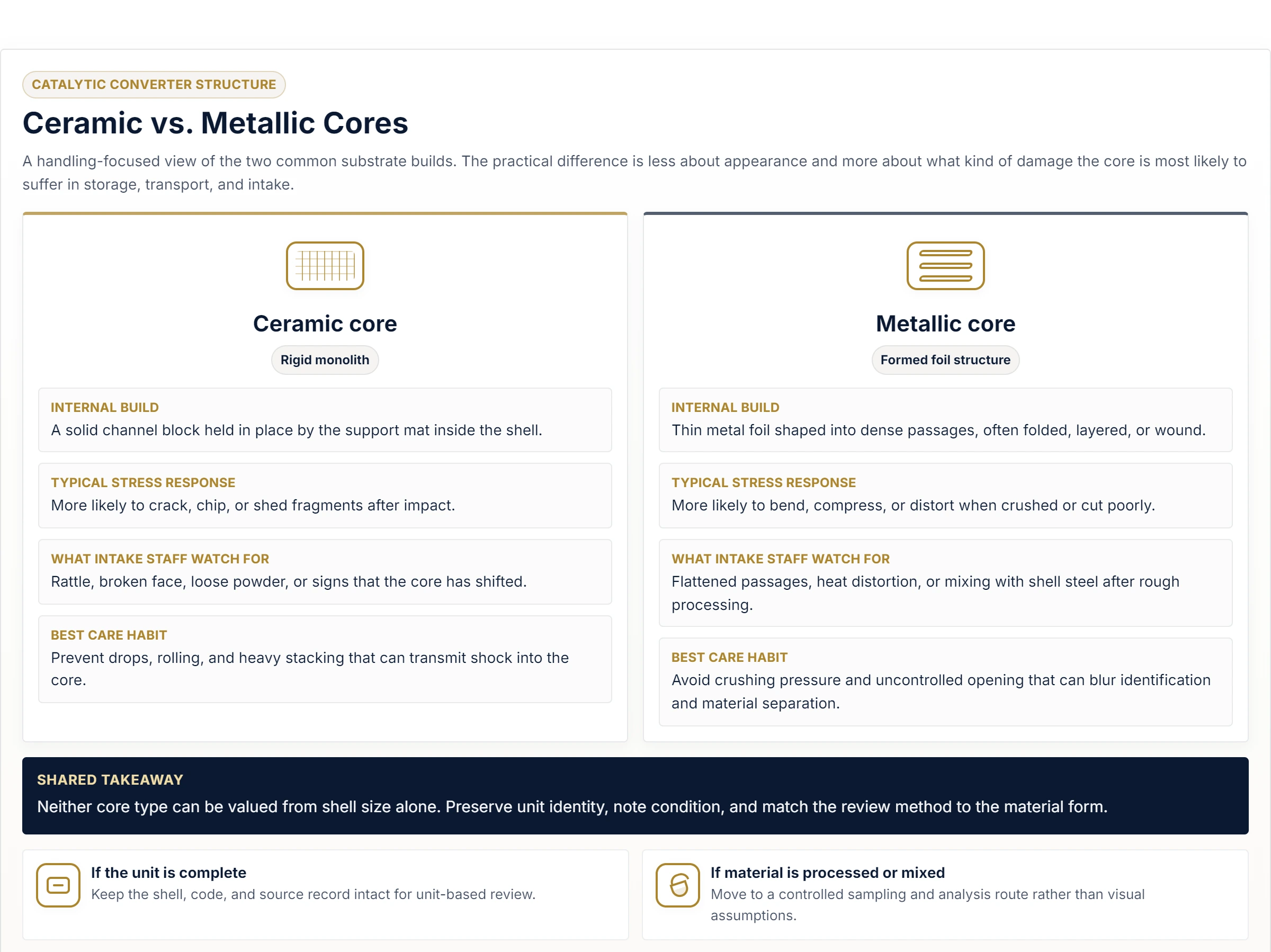
What does this comparison show?
The table shows the main practical differences between ceramic and metallic internal designs. It focuses on identification, handling, and recycling intake rather than assumptions about value.
Feature | Ceramic substrate | Metallic substrate |
|---|---|---|
Core form | Rigid cellular block | Layered or wound metal foil |
Impact response | May crack, chip, or turn into fragments | May bend, crush, or separate |
Typical visual clue | Uniform honeycomb with firm channel walls | Thin foil layers with a wound or folded pattern |
Handling concern | Avoid drops and hard knocks | Avoid crushing and uncontrolled cutting |
Recycling review | Check core presence, breakage, and contamination | Confirm substrate type, condition, and unit identity |
How is a ceramic converter built?
A ceramic design uses a solid but porous-looking channel block held inside a steel shell. The block tolerates exhaust heat well, yet it can break if dropped, struck, or crushed.
A typical ceramic catalytic converter has a round, oval, or flattened core that follows the shell shape. Its channels run from the inlet side to the outlet side. The support mat fills the gap between the core and housing.
The phrase automotive catalyst ceramic usually refers to this internal monolith, not the full steel unit. That distinction matters during trade. A complete converter, a loose core, and crushed ceramic material are different forms and may require different intake and review steps.
Why can a ceramic core break?
A ceramic core is stiff rather than flexible. A sharp blow can create cracks, loose pieces, or fine material even when the steel casing stays mostly intact.
Road impacts are one possible cause. Rough removal, dropping, poor stacking, or force from heavy items can also damage stored units. A broken core can shift inside the shell and produce a rattle.
Heat-related damage can also alter the channel face. However, staff should not diagnose a cause from appearance alone. Record what can be seen, keep the unit identified, and let the receiving or technical team decide what further review is needed.
How should ceramic-core units be stored?
Keep them dry, stable, and protected from heavy impacts. Use containers that prevent units from rolling or carrying the weight of a large pile.
Leave the housing and identifying marks intact where possible.
Separate badly crushed or leaking units from sound units.
Use stable bins that can bear the load.
Do not throw converters into a container from height.
Keep loose fragments with the correct lot if safe procedures allow it.
Label each business lot with its source and collection date.
These steps reduce material loss and make later checks easier. They also help maintain a clear record from collection to recycling.
How is a metallic converter built?
A metallic design uses very thin formed foil to create the internal channels. The foil may be layered, folded, or wound into a compact core inside the housing.
The substrate still needs a coated surface and active materials. Its main difference lies in the supporting body. Instead of a rigid ceramic block, the channel framework consists of shaped metal.
A guide to DieselNet describes cellular monolith substrates and the key forms used for catalytic systems. These forms include ceramic and metallic substrates with channel networks that expose exhaust to treated surfaces.
Why are metallic cores used?
Metallic cores can provide thin channel walls and a compact construction. They may also cope differently with vibration and rapid temperature changes than rigid ceramic blocks.
This does not mean that every metallic unit has the same design or use. Shell shape, foil pattern, channel form, and exhaust application can vary. A small unit may serve a different purpose from a larger unit that looks similar.
Metal foil can still suffer damage. Crushing may flatten its channels. Severe heat exposure may distort sections. Poor cutting can also mix shell material with the substrate, which makes identification and later material control harder.
Can a buyer identify a metallic core from the shell?
Not with full confidence. Shell style may provide a clue, but part numbers, maker data, and a controlled view of the channel face give stronger evidence.
A dismantler should avoid opening a sound unit only to check the core type. Cutting can remove identification, release dust, reduce traceability, and change how the lot must be handled. When possible, record the unit as received and ask the buyer what information is needed.
What are the main types of automotive converter designs?
Converter designs can be grouped by substrate material, location, vehicle use, and the form in which they enter recycling. These categories help staff sort units without treating every converter as identical.
The phrase types of automotive catalysts can cover more than ceramic and metal substrates. It may also refer to complete passenger vehicle units, close-mounted units, underfloor units, large commercial vehicle systems, or processed substrate material.
Does vehicle use affect construction?
Yes. The available space, exhaust flow, operating conditions, and system layout can affect the size and shape of the housing and core.
Passenger vehicle units may be compact and closely formed around nearby components. Truck and commercial vehicle systems can be much larger and heavier. Their collection may need stronger containers, lifting equipment, and planned transport.
Large size does not prove a set precious metal content. Likewise, a small housing should not be dismissed without identification. A sound review uses data linked to the actual unit or an analysis of prepared material.
Are complete units and processed material evaluated the same way?
No. Complete units can often be reviewed through identity and condition, while mixed or processed material may require sampling and laboratory analysis.
For intact converters, useful details include the stamped code, maker, vehicle source, shell condition, and whether the core appears present. Buyers can compare these records with their internal data.
For crushed, decanned, or mixed material, unit identification may no longer support the full review. In that case, representative sampling and measurement can determine the platinum, palladium, and rhodium content of the lot. A data report then supports the evaluation.
How does construction affect recycling evaluation?
Construction affects how a unit is identified, stored, sampled, and processed. It does not give a reliable value by itself.
A buyer reviewing an intact ceramic catalyst may start with its reference number and physical condition. The buyer may also check whether the shell seems complete, whether the core is present, and whether the item matches the recorded category.
Mixed lots need more care. Ceramic fragments, metallic foil, steel casing, dirt, and unrelated material should not be treated as one known product without a defined review method. Clear separation helps reduce uncertainty.
Which details support a fair unit-based review?
Clear identity, source records, condition notes, and consistent sorting support a more transparent review. Photos can help when codes are hard to read or collection occurs away from the receiving site.
Full part number or visible code
Vehicle maker or known source
Unit count
Complete, cut, crushed, or damaged condition
Known ceramic or metallic core type
Photos of the shell and stamped marks
Lot source and collection date
None of these details should replace analysis when the material form calls for it. They simply give the buyer a stronger record and reduce avoidable questions.
What should a receiving team record for each material form?
The table shows practical intake records for complete units, damaged units, loose cores, and processed material. The goal is to preserve identity and support the right review path.
Material form | Useful intake record | Main handling point |
|---|---|---|
Complete unit | Code, maker, count, photos, shell condition | Protect stamps and avoid needless cutting |
Damaged unit | Code if visible, damage notes, loose material | Contain fragments and keep them with the lot |
Loose ceramic core | Weight, source, lot ID, visible contamination | Use closed, suitable containers |
Metallic core | Weight, source, form, unit reference if known | Prevent mixing with shell steel |
Processed mixed material | Lot weight, preparation record, source list | Use a defined sampling and analysis process |
How can dismantlers protect material quality?
Dismantlers can protect quality by preserving unit identity, limiting breakage, and separating unlike material. A short written intake routine can prevent many common errors.
First, inspect the converter before removal. Record its code and source while those details remain easy to link to the vehicle. Next, use a removal method that does not crush the main body or destroy the stamped area.
After removal, place the unit in the correct container. Keep complete units apart from loose substrate and general exhaust steel. If a converter is already damaged, contain any fragments and label them with the same lot reference.
What handling mistakes create avoidable problems?
Hard impacts, mixed storage, lost codes, and uncontrolled cutting create the most obvious problems. They can reduce traceability and make material review less direct.
Dropping converters onto concrete or into deep bins
Placing heavy steel parts on top of ceramic-core units
Mixing complete units with cut shells and loose material
Removing or damaging stamped identifiers
Combining material from different lots without records
Allowing water, dirt, oil, or unrelated scrap into containers
Safe work controls also matter. Cutting and processing can create sharp edges, heat, dust, and lifting risks. Businesses should use suitable equipment, trained staff, and procedures that fit the material and work site.
Why does traceability matter during recycling?
Traceability links a used converter to its source, intake record, evaluation, and processing route. It supports clear communication between dismantlers, suppliers, buyers, and recycling facilities.
A traceable lot starts with a unique reference. Each handover should keep that reference with the unit list, weight record, photos, and condition notes. If material moves from complete units to a processed form, the record should show when and how that change occurred.
This approach is useful for both small batches and regular commercial supply. It also supports detailed reports when laboratory analysis is required. Good records cannot change the material, but they can make the review easier to follow.
Who benefits from a structured collection process?
Repair shops, dismantlers, recyclers, factories, fleet operators, and commercial vehicle businesses all benefit. Each party gains clearer records and fewer disputes about material form or condition.
For regular suppliers, agreed sorting groups can save time. One group may hold complete coded units. Another may contain damaged converters. Separate containers can hold loose ceramic material, metallic foil, or other exhaust parts.
Legend Metal focuses on business-to-business collection, assessment, and responsible recycling in Japan. Its service context includes used automotive converters, large vehicle units, electronic scrap, batteries, and related recyclable materials. The suitable review method depends on the item and the state in which it arrives.
Summary
Catalytic converters share a basic layered design, but their internal substrates are not all the same. Ceramic cores use a rigid channel block and need protection from impact. Metallic cores use formed foil and require care to prevent crushing, distortion, and mixing.
Construction affects handling and recycling review, yet appearance alone cannot establish recoverable metal content. Part numbers, vehicle data, unit condition, lot records, and laboratory results provide stronger evidence. Complete units and processed material should therefore follow different assessment paths.
For commercial sellers, careful removal and clear sorting preserve identity and support transparent communication. Legend Metal can review complete units, including a metal catalytic converter, through its business-focused collection and recycling service. When material has been decanned, mixed, or prepared, an analysis-led route may be more suitable.