
Working in an environment where daily tasks include operating heavy machinery is no easy feat. Emergency situations can arise at any time, and being prepared — knowing exactly what to do — is far better than being caught unaware.
To underscore the importance of preparedness, the company enlisted the help of the Yoshikawa Matsubushi Fire Department to conduct a training session at our main branch. More than 20 team members from both the warehouse and office staff took part, ensuring everyone left with the knowledge and hands-on experience needed to respond confidently in urgent situations.
The training was organized into three stations: fire prevention, first aid for injuries, and CPR and AED usage. Across all three, the firefighters emphasized the same core message — how to act the moment an emergency strikes, including the initial steps to take, who to call, and what to say.
Fire Prevention The firefighters walked us through the location of emergency exits and evacuation paths, then showed us how to operate a fire extinguisher — a skill that could make the difference in preventing a small incident from becoming a major one. As a hands-on exercise, we entered a smoke-filled tent with near-zero visibility, simulating what it's actually like to navigate a room engulfed in smoke during a real fire.
First Aid At the first aid station, we learned how to apply different types of bandages and slings, as well as how to fashion a makeshift splint from whatever materials happen to be on hand — a simple technique that can prevent further damage to an injury before professional help arrives.
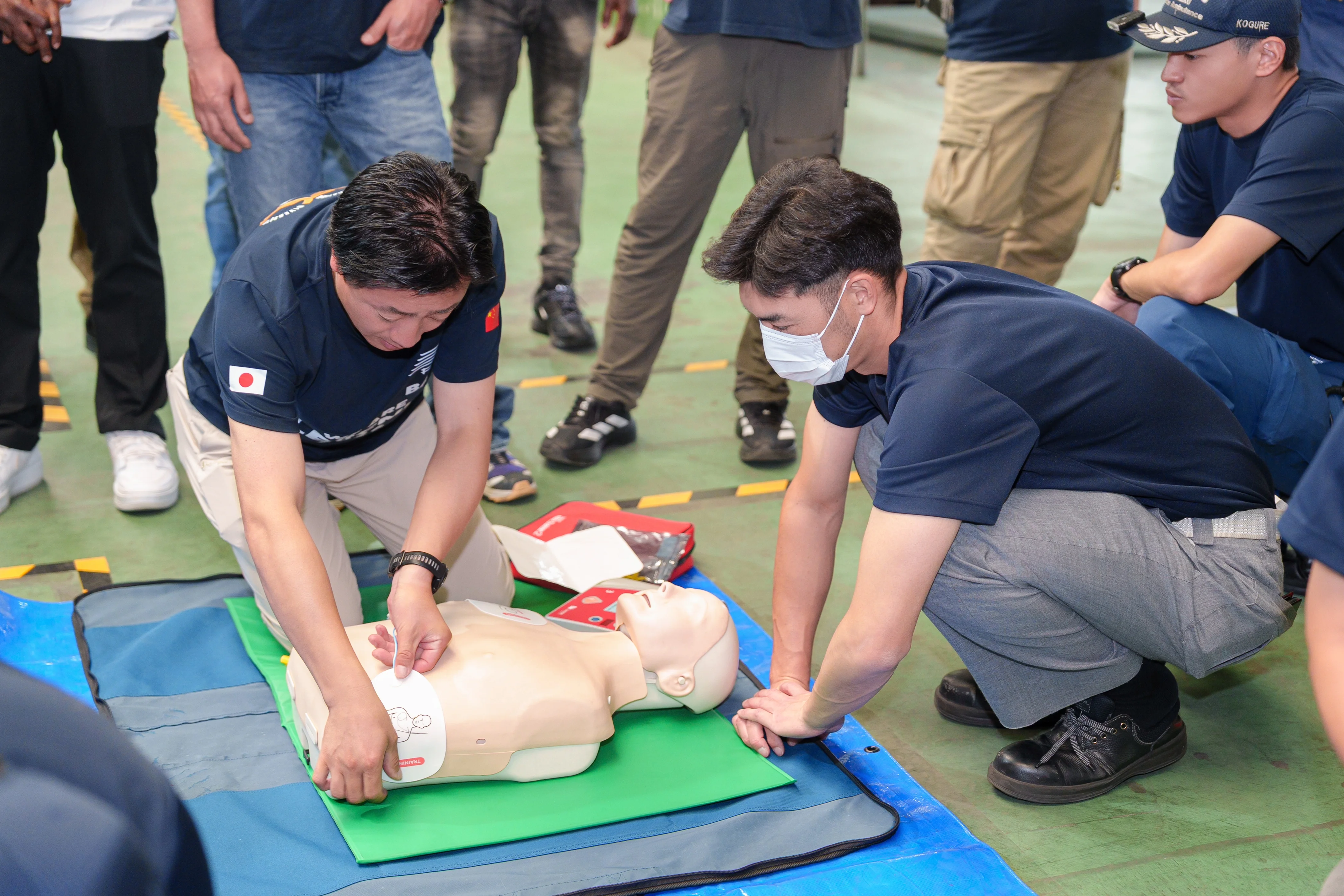
CPR and AED Few situations are as nerve-wracking as watching someone collapse right in front of you. Every second a person remains unconscious matters, and knowing how to act before paramedics arrive can make a real difference in their chances of survival. Guided by the firefighters, we practiced CPR and learned to operate an Automated External Defibrillator (AED). Each of us took a turn on a training dummy, with the firefighters checking our hand position, timing, and pressure. Knowing how to perform these steps gives us the confidence that, when the moment comes, we'll be ready to help.
This training reinforced a simple but important truth: preparedness matters, wherever you are. Knowing what to do in the critical moments before help arrives can prevent a situation from getting worse — and it might just help save a life. For a team that works alongside heavy machinery every day, that knowledge isn't just reassuring. It's essential.